
What are the Reasons for Companies to Outsource?
Discover why companies are increasingly turning to outsourcing as a cost-saving strategy. Explore the benefits and drawbacks of outsourcing and how it can help businesses optimize their resources and improve their bottom line.

What are the Reasons for Companies to Outsource?
What are the Reasons for Companies to Outsource?
Discover why companies are increasingly turning to outsourcing as a cost-saving strategy. Explore the benefits and drawbacks of outsourcing and how it can help businesses optimize their resources and improve their bottom line.
Contents
Outsourcing has become increasingly popular among businesses in recent years. In a globalized economy, organizations are constantly looking for ways to increase efficiency, reduce costs, and gain a competitive edge. Outsourcing offers a multitude of benefits, making it an attractive option for companies of all sizes and industries. In this blog post, we will explore the reasons why companies are choosing to outsource and how it can positively impact their operations.
Cost Reduction: Doing More with Less
One of the primary drivers for companies to outsource is the potential for significant cost savings. By outsourcing non-core tasks or processes to external service providers, businesses can reduce their expenses in several ways.
Firstly, outsourcing allows companies to take advantage of lower labor costs in other countries. This cost-saving opportunity is particularly appealing for tasks that do not require physical presence or specific location expertise. For example, call centers, IT support, and data entry services can be easily outsourced to countries with lower labor costs, such as India or the Philippines.
Furthermore, by outsourcing certain functions, companies can eliminate the need for investing in infrastructure, equipment, and technology. In many cases, outsourcing partners have already made significant investments in these areas, and businesses can leverage these resources without bearing the associated costs.
Lastly, outsourcing reduces the burden of employee-related expenses, such as payroll taxes, benefits, and training. By transferring these responsibilities to the outsourcing provider, companies can achieve further cost reduction and redirect their resources towards core business activities.
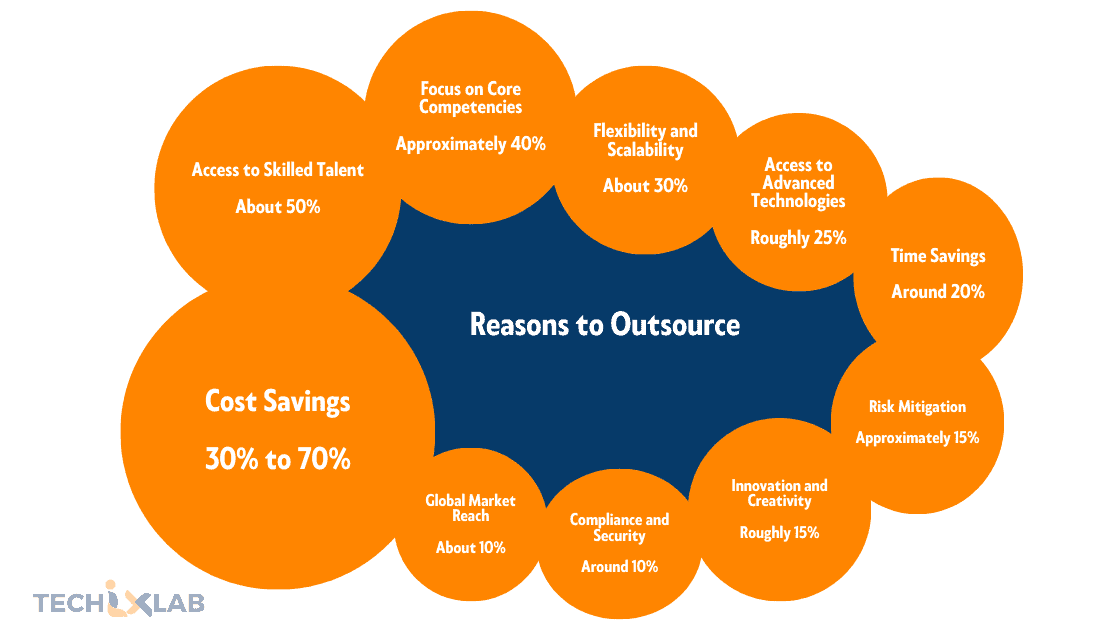
Access to Expertise: Unleashing Specialized Skills
Another compelling reason for companies to outsource is the access to specialized skills and expertise that may not be available in-house. By partnering with external service providers, businesses can tap into a vast talent pool and ensure high-quality outputs in specific areas.
For example, software development firms often outsource graphic design or user interface development to experts in these fields. By doing so, they can deliver exceptional user experiences without having to hire full-time designers or divert their developers’ focus from core coding tasks.
Moreover, outsourcing provides businesses with the opportunity to learn from industry experts. By collaborating with external partners who have extensive domain knowledge, organizations can gain valuable insights, adopt best practices, and bring innovation to their operations.
Increased Focus on Core Competencies: Thriving in the Competitive Landscape
Focusing on core competencies is essential for businesses striving to achieve sustained success in a competitive landscape. Outsourcing non-core tasks allows companies to dedicate more time, resources, and attention to activities directly linked to their core mission.
For instance, a manufacturing company that outsources its logistics and supply chain operations can concentrate on improving product quality, enhancing manufacturing processes, and expanding market reach. By doing so, the company can cultivate its core competencies and differentiate itself from competitors.
Additionally, by focusing on core competencies, businesses can leverage their specialized knowledge, skills, and experience to deliver superior products or services to their customers. This targeted approach not only enhances customer satisfaction but also strengthens the company’s brand reputation and market positioning.

Higher Efficiency and Productivity: Streamlining Operations
For example, a small e-commerce business can outsource its order fulfillment and customer support functions to a third-party logistics provider. This enables the company to focus on product development, marketing, and sales, while also ensuring efficient order processing and responsive customer service.
In addition, outsourcing allows businesses to benefit from the expertise and economies of scale possessed by the service providers. These advantages translate into faster turnaround times, improved quality, and ultimately, higher productivity. By leveraging these efficiencies, companies can allocate their internal resources more effectively and achieve better overall performance.
Outsourcing across different time zones offers distinct advantages for businesses operating globally. By partnering with service providers in different regions, companies can take advantage of the time differences to extend their operational hours and provide round-the-clock support to customers or clients.
For example, a software development company based in California can outsource its quality assurance activities to a team located in Eastern Europe. This arrangement ensures that while the California team is offline, the QA team is actively testing, identifying issues, and providing feedback, leading to faster development cycles.
The flexibility provided by outsourcing is also a significant benefit for companies. By engaging external service providers, businesses can scale their operations up or down quickly based on demand fluctuations. This agility allows organizations to adapt to changing market conditions, seize new opportunities, and navigate economic uncertainties more effectively.
Risk Mitigation: Minimizing Potential Setbacks
Managing risks is a critical aspect of running a successful business. Outsourcing certain functions can help companies minimize potential setbacks and enhance their risk management strategies.
For example, by outsourcing IT security and data management services to specialized providers, businesses can safeguard themselves against cyber threats and data breaches. These service providers possess the expertise and resources to implement robust security measures and ensure business continuity, relieving organizations of the burden of protecting sensitive information.
Moreover, outsourcing provides companies with a level of flexibility that can help mitigate risks associated with market volatility and economic uncertainties. When facing unexpected downturns or fluctuations in demand, businesses can quickly adjust their outsourcing arrangements to optimize costs and maintain operations without significant disruption.
There are numerous compelling reasons why companies are choosing to outsource various aspects of their operations. From cost reduction and access to specialized expertise, to increased focus on core competencies, higher efficiency and productivity, as well as time zone advantages, flexibility, and risk mitigation, the benefits are significant.
Businesses today face intense competition, rapid technological advancements, and evolving customer demands. Outsourcing offers a strategic solution that empowers companies to navigate these challenges, optimize their resources, and drive growth. By considering outsourcing opportunities, businesses can gain a competitive edge and position themselves for long-term success in an increasingly interconnected world.
Contents
Outsourcing has become increasingly popular among businesses in recent years. In a globalized economy, organizations are constantly looking for ways to increase efficiency, reduce costs, and gain a competitive edge. Outsourcing offers a multitude of benefits, making it an attractive option for companies of all sizes and industries. In this blog post, we will explore the reasons why companies are choosing to outsource and how it can positively impact their operations.
Cost Reduction: Doing More with Less
One of the primary drivers for companies to outsource is the potential for significant cost savings. By outsourcing non-core tasks or processes to external service providers, businesses can reduce their expenses in several ways.
Firstly, outsourcing allows companies to take advantage of lower labor costs in other countries. This cost-saving opportunity is particularly appealing for tasks that do not require physical presence or specific location expertise. For example, call centers, IT support, and data entry services can be easily outsourced to countries with lower labor costs, such as India or the Philippines.
Furthermore, by outsourcing certain functions, companies can eliminate the need for investing in infrastructure, equipment, and technology. In many cases, outsourcing partners have already made significant investments in these areas, and businesses can leverage these resources without bearing the associated costs.
Lastly, outsourcing reduces the burden of employee-related expenses, such as payroll taxes, benefits, and training. By transferring these responsibilities to the outsourcing provider, companies can achieve further cost reduction and redirect their resources towards core business activities.
Access to Expertise: Unleashing Specialized Skills
Another compelling reason for companies to outsource is the access to specialized skills and expertise that may not be available in-house. By partnering with external service providers, businesses can tap into a vast talent pool and ensure high-quality outputs in specific areas.
For example, software development firms often outsource graphic design or user interface development to experts in these fields. By doing so, they can deliver exceptional user experiences without having to hire full-time designers or divert their developers’ focus from core coding tasks.
Moreover, outsourcing provides businesses with the opportunity to learn from industry experts. By collaborating with external partners who have extensive domain knowledge, organizations can gain valuable insights, adopt best practices, and bring innovation to their operations.
Increased Focus on Core Competencies: Thriving in the Competitive Landscape
Focusing on core competencies is essential for businesses striving to achieve sustained success in a competitive landscape. Outsourcing non-core tasks allows companies to dedicate more time, resources, and attention to activities directly linked to their core mission.
For instance, a manufacturing company that outsources its logistics and supply chain operations can concentrate on improving product quality, enhancing manufacturing processes, and expanding market reach. By doing so, the company can cultivate its core competencies and differentiate itself from competitors.
Additionally, by focusing on core competencies, businesses can leverage their specialized knowledge, skills, and experience to deliver superior products or services to their customers. This targeted approach not only enhances customer satisfaction but also strengthens the company’s brand reputation and market positioning.
Higher Efficiency and Productivity: Streamlining Operations
For example, a small e-commerce business can outsource its order fulfillment and customer support functions to a third-party logistics provider. This enables the company to focus on product development, marketing, and sales, while also ensuring efficient order processing and responsive customer service.
In addition, outsourcing allows businesses to benefit from the expertise and economies of scale possessed by the service providers. These advantages translate into faster turnaround times, improved quality, and ultimately, higher productivity. By leveraging these efficiencies, companies can allocate their internal resources more effectively and achieve better overall performance.
Outsourcing across different time zones offers distinct advantages for businesses operating globally. By partnering with service providers in different regions, companies can take advantage of the time differences to extend their operational hours and provide round-the-clock support to customers or clients.
For example, a software development company based in California can outsource its quality assurance activities to a team located in Eastern Europe. This arrangement ensures that while the California team is offline, the QA team is actively testing, identifying issues, and providing feedback, leading to faster development cycles.
The flexibility provided by outsourcing is also a significant benefit for companies. By engaging external service providers, businesses can scale their operations up or down quickly based on demand fluctuations. This agility allows organizations to adapt to changing market conditions, seize new opportunities, and navigate economic uncertainties more effectively.
Risk Mitigation: Minimizing Potential Setbacks
Managing risks is a critical aspect of running a successful business. Outsourcing certain functions can help companies minimize potential setbacks and enhance their risk management strategies.
For example, by outsourcing IT security and data management services to specialized providers, businesses can safeguard themselves against cyber threats and data breaches. These service providers possess the expertise and resources to implement robust security measures and ensure business continuity, relieving organizations of the burden of protecting sensitive information.
Moreover, outsourcing provides companies with a level of flexibility that can help mitigate risks associated with market volatility and economic uncertainties. When facing unexpected downturns or fluctuations in demand, businesses can quickly adjust their outsourcing arrangements to optimize costs and maintain operations without significant disruption.
There are numerous compelling reasons why companies are choosing to outsource various aspects of their operations. From cost reduction and access to specialized expertise, to increased focus on core competencies, higher efficiency and productivity, as well as time zone advantages, flexibility, and risk mitigation, the benefits are significant.
Businesses today face intense competition, rapid technological advancements, and evolving customer demands. Outsourcing offers a strategic solution that empowers companies to navigate these challenges, optimize their resources, and drive growth. By considering outsourcing opportunities, businesses can gain a competitive edge and position themselves for long-term success in an increasingly interconnected world.